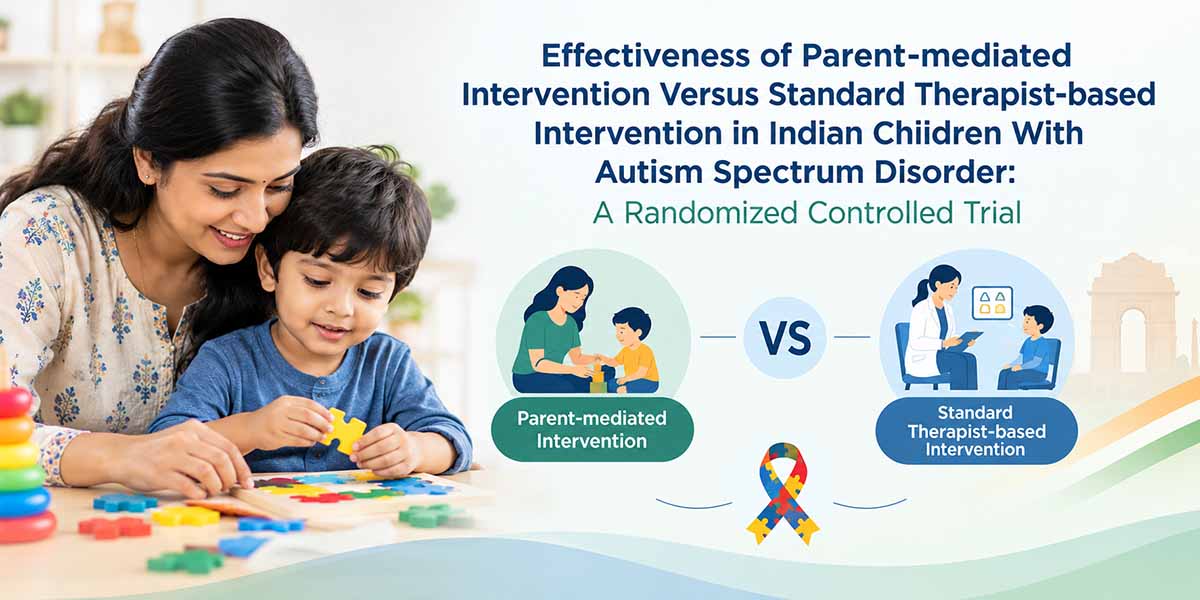
A Promising step for children with AUTISM: Empowering parents to make a difference!
What if some of the most meaningful opportunities for a child’s development begin right at home?
A recently published randomized controlled trial in the Journal of Developmental & Behavioral Pediatrics highlights the potential of parent-mediated intervention in improving developmental outcomes in young children with Autism Spectrum Disorder (ASD).
Study Highlight:
Effectiveness of Parent-mediated Intervention Versus Standard Therapist-based Intervention in Indian Children With Autism Spectrum Disorder: A Randomized Controlled Trial
The study evaluated the VQURA model — Value-based, Quality interaction, Unique for the child, Responsive and Adapted for family — and compared it with standard therapist-based intervention over six months.
Why is this study important for parents and children?
- Better social functioning: Children receiving parent-mediated intervention showed greater improvements in social and adaptive functioning.
- Reduced autism symptom severity: The VQURA group demonstrated a significantly greater reduction in autism symptom severity compared with the therapist-based group.
- Learning through everyday interactions: Parents can incorporate structured developmental strategies into play, communication, and daily routines, creating more opportunities for children to learn.
- Empowering parents: With appropriate professional training and guidance, parents can become active partners in their child’s developmental journey.
- A practical approach for Indian families: Parent-mediated intervention may help address barriers related to the availability, accessibility, and cost of specialized therapy.
The key message for parents: You do not have to be a therapist to make a meaningful contribution to your child’s development. With the right guidance, patience, consistency, and responsive interaction, everyday moments can become valuable learning opportunities.
The study followed children aged 24–36 months over six months. Both groups improved, but the parent-mediated group showed significantly greater gains in autism symptom severity, social functioning, and motor development.
While further research is needed to establish long-term outcomes and applicability across diverse families, these findings reinforce the importance of early intervention, active parental participation, and individualized developmental support.
Every child deserves the opportunity to reach their potential. Every parent deserves the knowledge and support to help them get there.
Read the study. Share the knowledge. Empower families.